
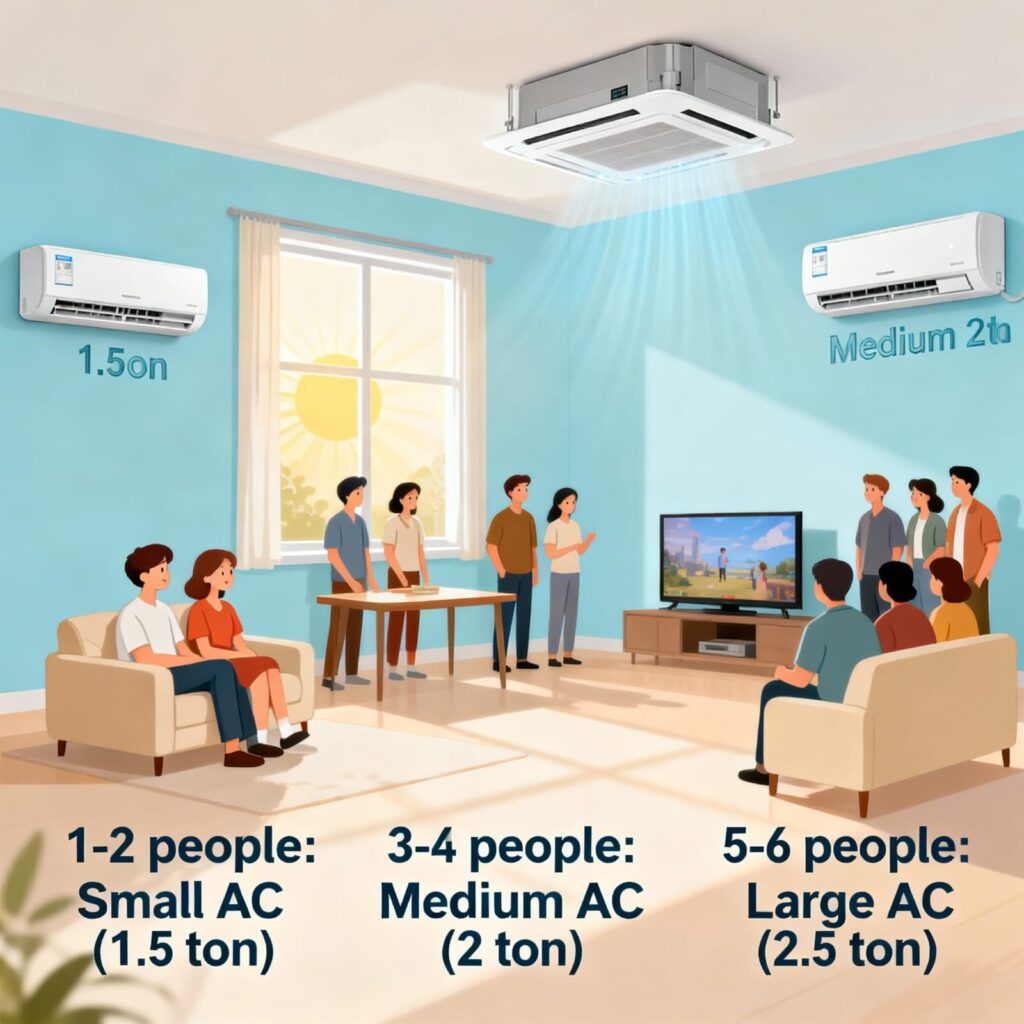
When selecting an air conditioner (AC) for your home, many people focus solely on room size, type of AC, or brand. However, one critical factor often overlooked is the number of occupants in the room. The number of people using a space directly affects the heat load, cooling requirements, and energy consumption. Understanding this factor ensures you choose an AC that provides comfort, efficiency, and long-term savings.
In this article, we will explore why the number of occupants matters, how it affects AC selection, and tips to optimize cooling for homes with varying occupancy.
Why the Number of Occupants Matters
Humans generate heat naturally. Each person emits approximately 100 to 150 watts of heat per hour depending on activity level. In enclosed spaces, this heat contributes to the overall temperature, impacting the AC’s ability to maintain a comfortable environment.
Impact on Cooling Load
- More occupants = higher heat load = AC must work harder.
- Fewer occupants = lower heat load = standard cooling may suffice.
Ignoring occupancy can result in an AC that either struggles to cool the room or consumes excess energy.
How Occupancy Affects AC Capacity
AC capacity is measured in BTU (British Thermal Units), which indicates how much heat the unit can remove per hour. Standard BTU calculations are based on room size, but the number of occupants must also be factored in:
- Add 600–800 BTU per additional person beyond the first two occupants.
- Example: A 250 sq. ft room may need 8,000 BTU for two people. If four people regularly occupy the room, an additional 1,200–1,600 BTU should be added.
This ensures the AC can maintain a comfortable temperature even during peak occupancy.
Energy Efficiency Considerations
Rooms with multiple occupants naturally increase energy demand. Choosing the right AC helps minimize electricity bills:
Inverter ACs
- Adjust compressor speed to match cooling demand.
- Efficiently handle varying heat loads without overconsumption.
Energy-Saving Modes
- Smart ACs can detect occupancy and adjust temperature automatically.
- Reduces electricity usage when rooms are empty.
By considering occupancy, homeowners can select an AC that balances comfort with energy efficiency.
Practical Examples
Small Bedroom with 1–2 People
- Standard 5,000–8,000 BTU window or split AC is usually sufficient.
- Energy-efficient settings prevent unnecessary power consumption.
Living Room with 4–6 People
- Requires higher BTU capacity (10,000–12,000 BTU).
- Split or inverter ACs are recommended for even cooling and noise reduction.
Home Office with Variable Occupancy
- Smart ACs with sensors adjust cooling based on real-time occupancy.
- Ideal for rooms that are not always occupied, preventing wasted electricity.
Integration with Smart Features
Modern ACs can enhance comfort and efficiency by leveraging occupancy sensors and smart scheduling:
- Motion sensors detect when a room is in use and adjust cooling accordingly.
- Smart thermostats can pre-cool rooms before occupants arrive.
- Remote control apps allow adjustment of temperature even when away from home.
These features are particularly useful for rooms with fluctuating occupancy, ensuring optimal comfort without overspending on electricity.
Tips for Optimizing Cooling Based on Occupancy
- Assess Regular Usage – Determine how many people typically use each room.
- Choose the Right AC Type – Larger rooms with multiple occupants benefit from split or inverter ACs.
- Adjust Settings – Use energy-saving or eco modes during low occupancy.
- Use Smart Scheduling – Program ACs to operate only when the room is in use.
- Proper Placement – Install the indoor unit in a location that ensures even air distribution for all occupants.
Why Occupancy Matters in 2025
With modern households being more dynamic, the number of occupants in a room can vary throughout the day. Families, shared living spaces, or home offices mean that cooling needs are not static. Factoring in occupancy ensures:
- Comfortable temperature for all users.
- Reduced energy consumption by avoiding overcooling.
- Extended AC lifespan due to balanced operation.
Conclusion
The number of occupants is a critical factor when selecting an air conditioner. By considering how many people regularly use a room, you can:
- Select the right AC capacity (BTU).
- Maintain comfort during peak usage.
- Reduce energy consumption and electricity bills.
- Extend the lifespan of your AC unit.
At CoolShop24, we offer a wide range of ACs suitable for different room sizes and occupancy levels. From energy-efficient split and inverter ACs to smart models with occupancy sensors, we help you find the perfect solution for your home.
Take the guesswork out of choosing an AC—consider room size, occupancy, and features, and enjoy a perfectly cool, energy-efficient home all year round.