
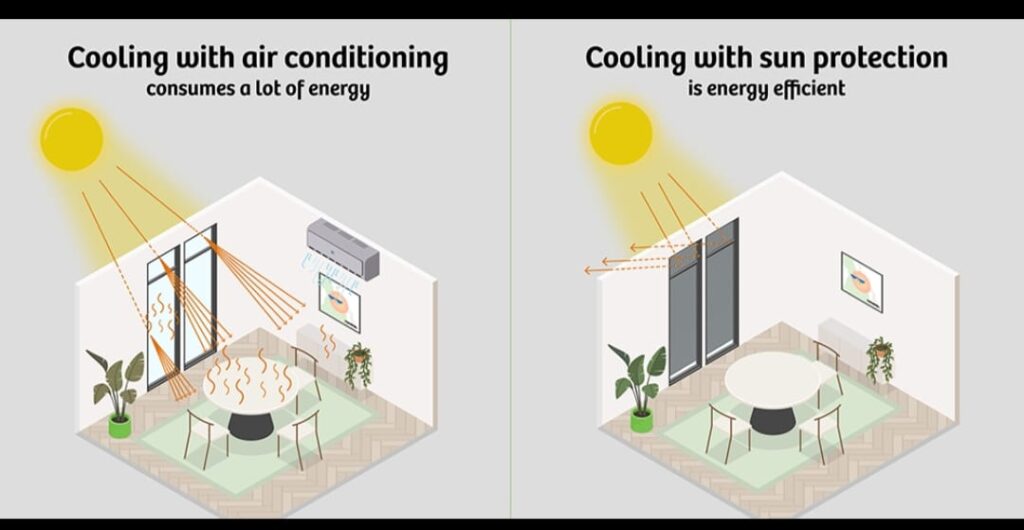
Selecting the right air conditioner (AC) for your home is more than just picking a model with high cooling power. While factors like room size, capacity, and energy efficiency are important, one often overlooked yet critical factor is room orientation and sunlight exposure. These elements can significantly impact your AC’s performance, energy consumption, and overall comfort.
In this blog, we’ll explore why room orientation and sunlight exposure matter, how they affect AC selection, and tips to optimize your home cooling experience.
Understanding Room Orientation
Room orientation refers to the direction your room faces—north, south, east, or west. This direction determines how much sunlight your room receives during the day, which directly affects the temperature inside.
🔹 East-Facing Rooms
- Receive direct sunlight in the morning.
- Tend to heat up early but cool down by afternoon.
- ACs with moderate capacity are usually sufficient.
🔹 West-Facing Rooms
- Receive intense sunlight in the afternoon, when the heat is highest.
- Can make the room feel warmer in the evening.
- Often require a slightly higher BTU capacity or an inverter AC for consistent cooling.
🔹 North-Facing Rooms
- Typically get less direct sunlight.
- Remain cooler throughout the day.
- Standard AC capacity is usually adequate.
🔹 South-Facing Rooms
- Receive consistent sunlight throughout the day.
- Can make the room warmer overall, especially in the afternoon.
- May need a more powerful AC or additional insulation measures.
Why Sunlight Exposure Matters
Sunlight exposure plays a major role in determining the heat load of your room. More sunlight means:
- Higher room temperature.
- AC working harder to maintain comfort.
- Increased electricity consumption if the AC isn’t properly sized.
Conversely, rooms with minimal sunlight exposure stay cooler naturally, allowing your AC to run efficiently and save energy.
Example:
A west-facing living room with large windows may heat up to 40°C during summer afternoons. Choosing an AC without considering sunlight exposure may lead to insufficient cooling and higher energy bills.
Impact on AC Capacity Selection
AC capacity is measured in BTU (British Thermal Units), which indicates how much heat it can remove per hour. Sunlight exposure and room orientation affect the required BTU:
- High Sunlight (West/South-Facing): Increase the calculated BTU by 10-20% to ensure effective cooling.
- Moderate Sunlight (East-Facing): Slight adjustment may be sufficient.
- Low Sunlight (North-Facing or shaded rooms): Standard BTU calculation based on room size is usually enough.
Correctly sizing your AC based on sunlight ensures optimal cooling, energy efficiency, and comfort.
Energy Efficiency Considerations
Rooms with high sunlight exposure tend to consume more electricity if your AC is overworked. To improve energy efficiency:
- Opt for inverter ACs, which adjust compressor speed to maintain temperature efficiently.
- Use energy-saving modes or eco modes during peak sunlight hours.
- Consider installing curtains, blinds, or reflective films to reduce heat gain from sunlight.
By addressing sunlight exposure, you can reduce electricity bills while keeping your room comfortable.
Practical Tips for High Sunlight Rooms
- Install AC on Shaded Walls: Place the indoor unit on a wall not directly exposed to sunlight to improve performance.
- Use Reflective or Dark Curtains: Block or reflect sunlight during peak hours.
- Consider Split or Inverter ACs: These provide better cooling for rooms with high heat load.
- Check Window Size and Glass Type: Large windows or single-pane glass can increase heat gain. Double-glass or tinted windows help reduce the cooling load.
- Regular Maintenance: Keep filters and outdoor units clean for maximum efficiency.
Integrating Smart Features
Modern ACs with smart connectivity can further optimize cooling based on sunlight exposure:
- Temperature sensors detect room heat and adjust compressor speed.
- Scheduled cooling ensures rooms are pre-cooled before peak sunlight hours.
- Remote control lets you turn on the AC in advance, especially for west or south-facing rooms that heat up quickly.
These features enhance comfort, save energy, and extend the life of your AC.
Conclusion
Room orientation and sunlight exposure are critical yet often overlooked factors in choosing the right air conditioner. Understanding how your room interacts with sunlight allows you to select the proper AC capacity, type, and features, ensuring efficient cooling, lower electricity bills, and maximum comfort.
At CoolShop24, we offer a wide range of ACs—including inverter, split, and window models—designed to handle varying room orientations and sunlight exposure. With the right AC and smart planning, you can enjoy a cool, comfortable, and energy-efficient home all year round.