
During the hot summer months, air conditioners are essential for maintaining a comfortable indoor environment. However, even the most efficient AC can struggle to cool a room if there are gaps around windows and doors. Air leaks allow cool air to escape and hot air to enter, increasing energy consumption and raising electricity bills. Properly sealing windows and doors is a simple, cost-effective solution that enhances comfort, saves energy, and protects your home.
In this blog, we’ll explore why sealing windows and doors is important, the best methods for sealing, and practical tips to maximize efficiency.
Why Proper Sealing Matters
Prevents Energy Loss
- Gaps around windows and doors allow conditioned air to escape.
- AC units must work harder to maintain the desired temperature, consuming more electricity.
- Proper sealing reduces the workload on your AC, improving efficiency.
Enhances Indoor Comfort
- Eliminates drafts of hot air, cold spots, and temperature fluctuations.
- Maintains a consistent, comfortable indoor environment throughout the day.
Protects Against Dust, Noise, and Insects
- Sealing gaps keeps out dust, pollen, and small insects.
- Reduces external noise, making your home quieter and more peaceful.
Extends AC Lifespan
- AC units operating efficiently without overworking last longer.
- Fewer strain cycles on the compressor and other components reduce wear and tear.
Common Sources of Air Leaks
- Window Frames: Older or poorly installed windows often have gaps at the edges.
- Door Frames: Spaces between doors and the frame can allow air exchange.
- Sliding Doors and Patio Doors: Tracks may not be sealed properly.
- Weathered Seals: Rubber gaskets or foam strips can degrade over time.
Even small leaks can lead to a significant loss of cool air, increasing energy bills by up to 25%.
Methods to Seal Windows and Doors
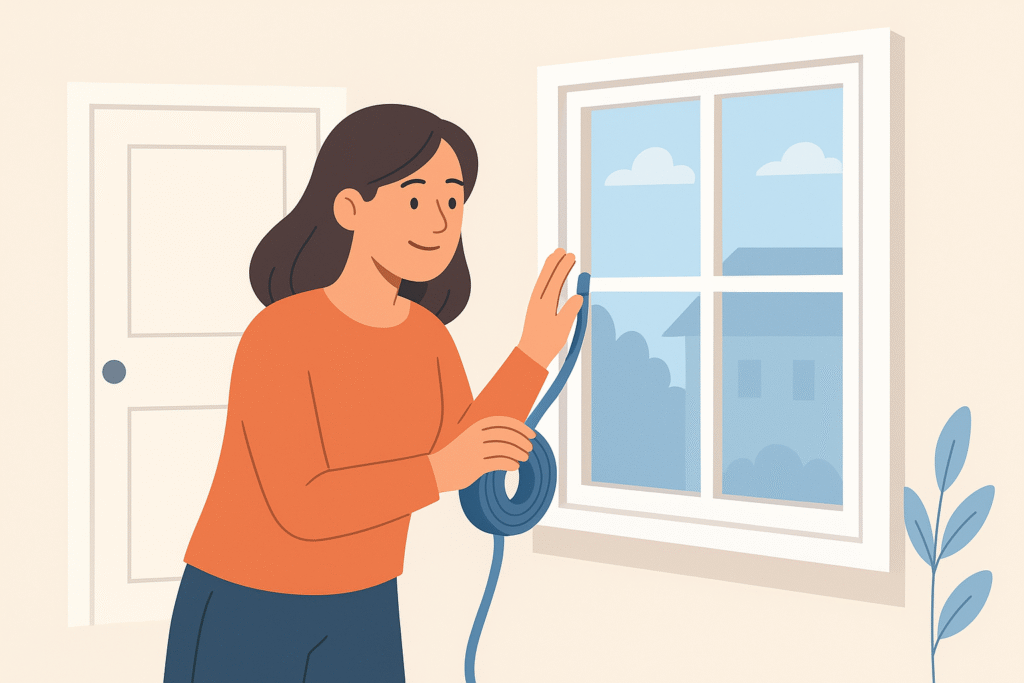
Weatherstripping
- Apply adhesive-backed foam, rubber, or vinyl strips around window and door frames.
- Creates a tight seal to prevent air leaks.
- Inexpensive and easy to install, suitable for DIY projects.
Caulking
- Use silicone or acrylic caulk to seal cracks and gaps around frames.
- Ideal for permanent sealing and long-term efficiency.
- Check for gaps between the window frame and wall or door frame and threshold.
Door Sweeps and Thresholds
- Install door sweeps at the bottom of doors to block air from entering underneath.
- Adjustable thresholds further prevent drafts and improve insulation.
Window Insulation Film
- Transparent film applied directly to windows reduces air leakage.
- Reflects heat in summer, helping maintain cooler indoor temperatures.
Draft Stoppers and Curtains
- Heavy or thermal curtains block heat from entering.
- Draft stoppers at door bottoms reduce air exchange and energy loss.
Tips for Effective Sealing
- Inspect Regularly – Check for gaps, cracks, or worn seals around windows and doors every season.
- Use Quality Materials – High-quality weatherstrips, caulks, and seals last longer and provide better insulation.
- Seal Sliding Doors Carefully – Ensure tracks are clean and properly sealed to prevent gaps.
- Combine with Curtains or Blinds – Reduces heat gain through windows, enhancing the AC’s efficiency.
- Consider Professional Help – For older homes with significant gaps, professional sealing ensures maximum energy efficiency.
Benefits of Proper Sealing
- Lower Energy Bills: Reduced AC workload translates to significant savings over time.
- Improved Comfort: Consistent indoor temperatures without drafts or hot spots.
- Eco-Friendly Home: Less electricity consumption reduces your carbon footprint.
- Enhanced Home Protection: Keeps out dust, insects, and external noise.
- Increased Property Value: Proper insulation and sealing are attractive features for potential buyers.
Example Scenario
Imagine a living room with a west-facing window and an old door with gaps at the bottom:
- Without sealing: Cool air escapes, the AC runs continuously, and the electricity bill rises.
- With proper weatherstripping, door sweeps, and caulking: The room stays cool, AC runs efficiently, and energy consumption drops.
This shows how small sealing improvements can have a big impact on comfort and savings.
Conclusion
Properly sealing windows and doors is one of the most effective ways to maintain a comfortable indoor temperature and save energy. It reduces heat gain, improves AC efficiency, lowers electricity bills, and extends the lifespan of your cooling system.
At CoolShop24, we recommend combining proper sealing with energy-efficient ACs, smart thermostats, and optimal placement to maximize cooling performance and minimize electricity usage. Investing in these small adjustments ensures your home remains cool, comfortable, and energy-efficient, even during the hottest summer months.
Take control of your home’s cooling today—seal your windows and doors properly and enjoy smarter, cost-effective air conditioning.